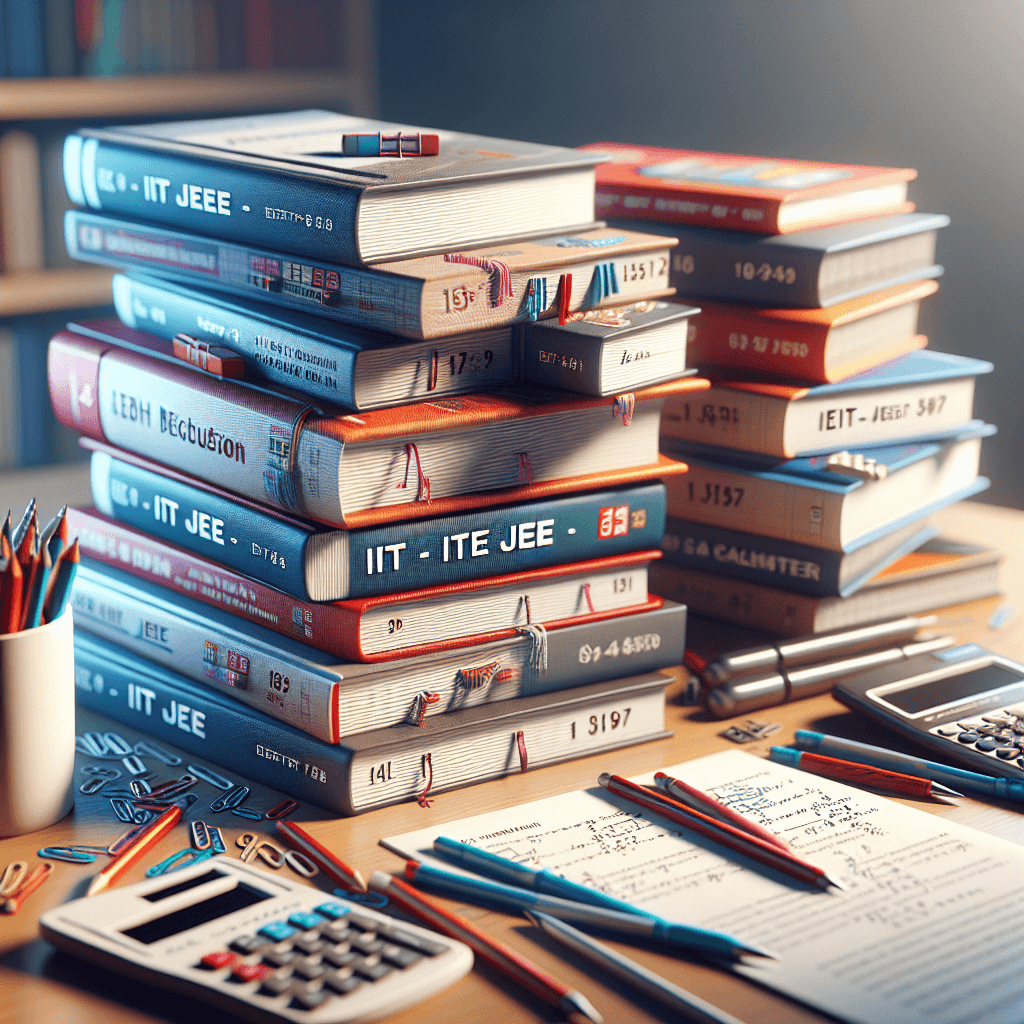
Have you ever stood in front of a mountain of IIT JEE books, wondering, “Which ones should I actually study?” Trust me, you’re far from alone! With countless options out there, it can feel like a maze trying to figure out which books will actually help you ace the exam—and which ones might just end up gathering dust on your shelf.
Welcome to Day 4 of our Best Books for IIT JEE series! Today, let’s cut through the clutter and help you pick the right books that will make your preparation sharper and smarter.
Why Choosing the Right Books Really Matters
Think about it this way: your time is limited, but the JEE syllabus is massive. So, every book you open should have a clear purpose. The right books don’t just explain concepts—they clear up the confusion, give you ample practice, and guide you toward mastery. It’s not about having more books; it’s about having the right ones.
Different Kinds of IIT JEE Books – What You Need to Know
Generally, JEE books fall into three buckets:
- NCERT textbooks — These are your go-to for clear concepts.
- Reference books — Great for diving deeper and understanding tricky topics.
- Practice books — Filled with problems to boost your problem-solving skills.
Now, let’s zoom into each subject and see what top students swear by.
Physics: Building Blocks to Mastery
- NCERT Physics (Class 11 & 12): If you ask me where to start, it’s here. NCERT lays down the foundational ideas clearly—especially important because physics overlaps a bit with chemistry at times.
- Concepts of Physics by H.C. Verma: This one’s almost legendary. It perfectly blends theory with lots of application-driven problems.
- Understanding Physics by D.C. Pandey: Excellent for practice questions and solidifying what you’ve learned.
Chemistry: Where Theory Meets Practice
- NCERT Chemistry (Class 11 & 12): You can’t skip this, especially for Inorganic Chemistry. The theory is crystal clear and often directly tested.
- Physical Chemistry by O.P. Tandon: Struggling with numerical problems? This book will be your friend.
- Organic Chemistry by Morrison & Boyd: Clear, detailed, and simplifies complex ideas—just what you need for organic chemistry.
Mathematics: From Basics to Advanced
- NCERT Mathematics (Class 11 & 12): Your foundation starts here—don’t overlook these.
- IIT Mathematics by M.L. Khanna: Perfect for tackling the tough, challenging problems.
- Problems in Calculus of One Variable by I.A. Maron: The name says it all—great for mastering calculus through practice.
Tips to Get the Most Out of Your Books
- Stick to 1 or 2 books per topic—more can confuse you and slow you down.
- Revise often and keep practicing—repetition helps you remember and improve speed.
- Solve previous years’ question papers—they give you a sneak peek into the exam’s pattern.
- Don’t ignore your class notes; your teachers’ explanations can make complex books easier.
Picking the Right Books for YOU
Not all students are the same, right? Some like pictures and diagrams, others want endless practice problems. So, choose books that match how you learn best. Remember, the goal is to understand deeply, not just memorize formulas.
Books Are Important, But So Is Your Strategy
Even with the best books, without a plan, progress can stall. Make a clear timetable, divide your time by subjects, and include breaks to recharge. Want a detailed plan? Check out our complete guide to preparing for IIT JEE.
Also, keep your study aligned with the official IIT JEE syllabus to make sure you’re not missing anything important.
A Little Motivation to Keep You Going
At the end of the day, cracking IIT JEE doesn’t mean owning tons of books. It’s about how well you use a few solid ones. Pick wisely, practice consistently, and believe in yourself—you’ve got this!
Brought to you by the ClassApna teaching community
FAQs
Q1. Are NCERT books enough for IIT JEE?
NCERT books are your foundation, especially for Chemistry, but to tackle tougher problems, you’ll want to add the recommended reference books.
Q2. How many books should I use per subject?
Keeping it to 1 or 2 core books per subject is best. Too many books can distract you.
Q3. Which is the best book for JEE Mathematics?
NCERT and “IIT Mathematics” by M.L. Khanna are top picks for full coverage.
Q4. How do I manage time with so many books?
Stick to a timetable and focus on quality over quantity.
Q5. Do I need different books for JEE Main and Advanced?
Most books cover both, but double-check to see if the book is tailored to the exam you’re targeting.
Q6. Is practicing past papers important?
Absolutely! They help you understand what to expect and improve speed.
Q7. Can I crack JEE through self-study using these books?
Yes! Many have done it—just stay consistent and dedicated.
Q8. Are online materials as good as books?
Online resources are great to supplement—but books build a stronger foundation.
Q9. What if a book feels too tough?
Start with basics in NCERT and gradually move up. Don’t hesitate to ask teachers or friends for help.
Q10. How often should I revise?
Regularly—daily or weekly revision keeps topics fresh in your mind, especially as the exam approaches.
Feeling ready? Pick your books, make a plan, and take it one day at a time. Your IIT JEE success story starts here!