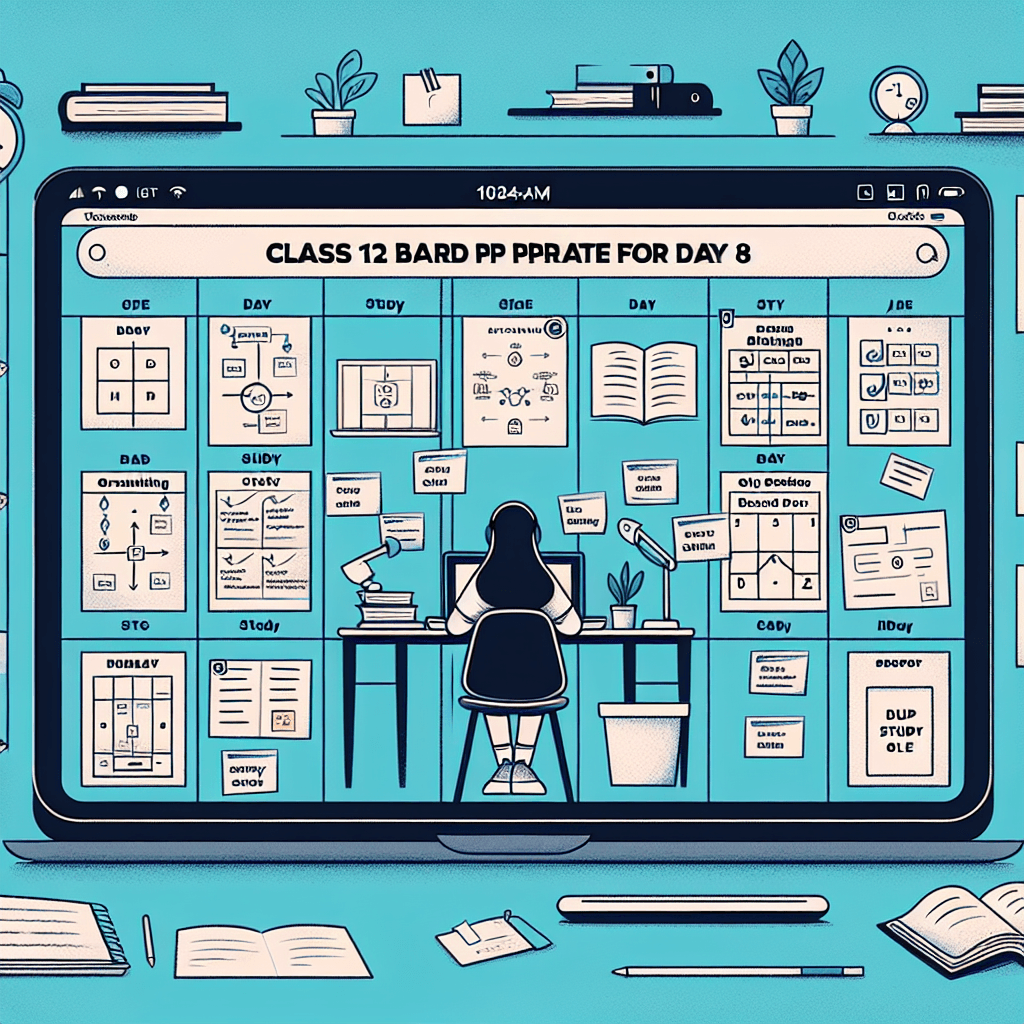
Day 8 of Your Class 12 Board Prep: Staying on Track with Your CBSE Strategy
Hey there! If you're on Day 8 of your board exam preparation and feeling a bit stuck or overwhelmed, don't worry—you're definitely not alone. By now, you might be wondering if your study plan is working or how to push through the middle of this marathon without burning out.
Let's take a deep breath and walk through a simple, clear strategy to keep you confident and focused today.
Why Day 8 Is a Big Deal
Think about it: you've been studying for just over a week. You've likely mapped out your timetable, tackled some tough topics, and maybe even tried a few practice questions. But around this time, that initial excitement can fade, and doubts sneak in.
That's perfectly normal! Day 8 is the perfect moment to check in with yourself, figure out what's clicking, and tweak your strategy so it works better for YOU.
A Simple Day 8 Plan to Keep You Moving
1. Morning Check-In: What's Working, What's Not?
Spend just 15 minutes reviewing what you've studied so far. Be honest—what topics do you feel you've nailed? And where are you still fumbling?
Grab a notebook and jot down two topics you feel solid about, and two that still need work. This little exercise is like setting markers on your learning journey, telling you exactly where to focus next.
2. Zero in on Those Tricky Topics
Instead of trying to cover everything again (which only tires you out), pick the two subjects where you find concepts hardest. Dedicate about 60 to 90 minutes to digging deep here.
Pro tip: Try explaining the tough parts out loud—pretend you're teaching someone else, even if it's just your pet or a family member. Teaching yourself is one of the quickest ways to understand and remember tricky stuff.
3. Take Breaks That Recharge (Not Just Scroll)
Those quick phone checks might feel like a break, but screens can drain your energy more than you think. Step away and stretch, grab a healthy snack, or take a short 10-minute walk outside. Your brain will thank you.
4. Practice Makes Perfect (or at Least Better)
After revising, challenge yourself with a few mixed questions from your weak spots. Use your class notes or NCERT textbooks to check how you did.
If you want to up your study game even more, we've got a handy guide on CBSE Study Techniques packed with tips to make your prep smoother.
5. Evening Recap with Spaced Repetition
Before wrapping up your day, spend around 20 minutes going over the stuff you studied today and yesterday. This kind of spaced revision helps lock knowledge in, so you're not scrambling last minute.
6. Focus on YOUR Progress, Not Anyone Else's
It's easy to peek over at what classmates are doing and feel worried. But remember: your journey is uniquely yours. Trust your plan and keep moving forward.
Keeping Your Spirits High
Why are you putting in all this effort? Maybe it's for the exam scores, but also for the person you're becoming—someone who works hard, pushes through challenges, and grows stronger every day. Remember, aiming for progress—not perfection—is what really counts.
If you want a fresh plan for your next revision session, check out our CBSE Revision Strategy for easy-to-follow steps.
Beyond Week One: The Habits That Decide Your Score
Once the basics are in place, the plan stops being about finishing the syllabus and starts being about scoring on it. These are the habits that separate a stressed scramble from a calm, high-scoring exam week.
Prioritise the High-Scoring Chapters
Not every chapter carries the same weight. Dig into the last five to ten years of board papers and mark the chapters that keep coming back. Mastering those high-weightage topics moves your score faster than skimming everything at once.
Study in Short, Timed Blocks
Marathon sessions lose their value after about an hour. Work in 40–50 minute focused blocks with a real 10-minute break between them, and give each block one clear target: summarise a tough chapter, or solve a handful of practice questions. Small wins, ticked off, add up.
Practice Under Real Exam Conditions
Knowing your material and recalling it under pressure are two different skills. Set a timer, sit at a quiet desk, and attempt a full section from a recent board paper as if the exam were live. Then check your answers, note where you slipped, and fix exactly that.
Make Revision Active, Not Passive
Revision that only involves re-reading fades fast. Turn it into something you do:
- Flashcards for formulas, dates and definitions
- Mind maps that connect related ideas on one page
- Teaching a concept out loud to a friend or sibling — if you can explain it, you own it
Alternate Two Subjects a Day
Each day, actively revise two subjects and alternate the pairing. It keeps your brain fresh, stops one subject from hogging every session, and surfaces gaps early while there is still time to close them.
Protect Your Energy
Sleep, proper meals and short walks are part of the syllabus, not a break from it. A rested brain holds far more than an exhausted one pulling an all-nighter.
Three Traps to Avoid
- Passive reading. Highlighting and re-reading feel productive but rarely stick. Summarise aloud, quiz yourself, or write the answer out from memory instead.
- Skipping sample papers. They are the only honest mirror you get before exam day. Solve them under a timer, every week.
- Letting anxiety snowball. When panic rises, pause, take a few slow breaths, step away for five minutes, then come back to a calmer mind.
Quick FAQs to Clear Up Your Doubts
Q1. How many hours should I study daily for Class 12 boards?
Most students find 6–8 focused hours (including breaks) to be effective. Quality matters more than just quantity, though!
Q2. Is a daily timetable useful?
Absolutely! It keeps your subjects organized, ensures you revisit all topics, and reduces last-minute pressure.
Q3. How often should I do mock tests?
Try one full mock test per subject each week as exams draw near. It's great for pacing yourself.
Q4. How do I avoid distractions?
Keep your phone out of reach, let your family know when you're studying, and use short, screen-free breaks to refresh.
Q5. What's the best way to tackle hard chapters?
Break them into small chunks, write summaries in your own words, and do practice questions after each chunk.
Q6. Am I too late to change my strategy?
Nope. It's never too late. Adjust based on what's working now; flexibility is key.
Q7. Is group study helpful?
Yes, if you're focused. Explaining things to friends and clearing doubts can really help — just watch out for distractions.
Q8. Should I only rely on NCERT books?
Start with NCERT—they cover the basics well. Add extra books for more practice or if you want to tackle tougher questions.
Q9. What should I do the day before the exam?
Focus on light revision and rest up. Avoid learning brand-new things last minute.
Q10. Which are the most important topics to revise?
Open the last five to ten years of board papers and list the chapters that keep reappearing. Those high-weightage topics deserve the bulk of your revision time.
Q11. How do I handle exam stress during the paper?
If a question blanks you, skip it and move on — return only if time permits. Slow, deep breaths settle the body faster than willpower alone.
Q12. What's the best way to revise in the last week?
Go over key formulas, diagrams and definitions, write short answers from memory, and attempt two or three full-length timed mocks. Stop learning anything new.
Q13. Should I focus only on my weak subjects now?
Balance both. Strengthen the weak areas deliberately, but keep your strong subjects warm with practice — abandoning them is how they become weak.
Q14. Can apps really help with preparation?
Yes, for quizzes, flashcards and timers. Treat them as tools, not entertainment, and put the phone down the moment a notification pulls you off task.
Q15. Are sample papers really that important?
They reveal the exam pattern, train your timing, and show you exactly where you still lose marks. Treat every sample paper as a rehearsal.
Remember, every day you put in the effort is a step closer to your goals. You've got this!
Written with care by the ClassApna teaching community—supporting you every step of the way.